Recent updates, runs, and community news.
 A brief list of things to check in order to prevent runner's knee pain
(based on a personal experience of a 10x marathoner, find the strava profile here). The list should not be considered complete, it only represents the personal perspective.
A brief list of things to check in order to prevent runner's knee pain
(based on a personal experience of a 10x marathoner, find the strava profile here). The list should not be considered complete, it only represents the personal perspective.
The topic of hills running was briefly touched on in one of the previous posts, this time we are going to compare the data from steep uphill and downhill sections route sections of a 20 km run.
To answer this question, some data were collected during a 20 km night run. It was mainly a pretty flat route in Freiburg and surroundings, except of a hilly part in Heuweiler, which is a very scenic and beautiful place nearby.
To give some context, Wolfsbuck (273m above sea level) is a hill in Freiburg, Germany. The prominence is not that high, just 35m, still, it's a very good place to run because it's located practically within the city, the trails are well-maintained, and it's comfortably reachable on foot even during...
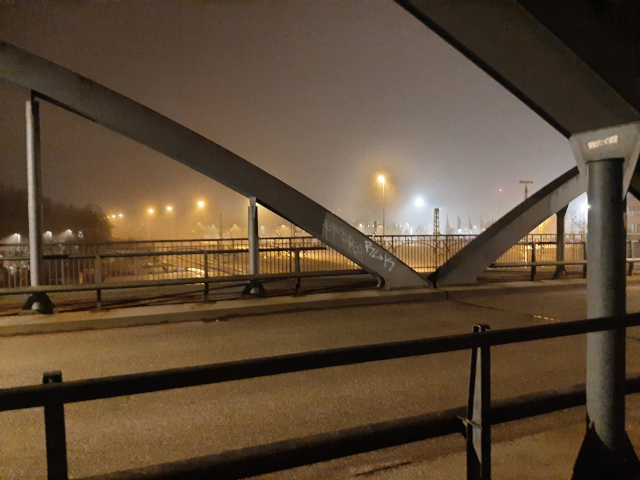
 This one wasn't about performance. It was about jogging through a dense fog and trying to keep the fingers warm. Anyway, the job is done, the weekly mileage is topped up with another 14 kilometers. ..And the body received almost 85 minutes of something that can be called a workout.
Small, but still a gain!
This one wasn't about performance. It was about jogging through a dense fog and trying to keep the fingers warm. Anyway, the job is done, the weekly mileage is topped up with another 14 kilometers. ..And the body received almost 85 minutes of something that can be called a workout.
Small, but still a gain!
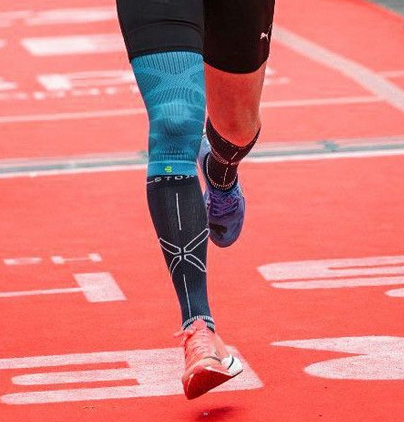 A brief list of things to check in order to prevent runner's knee pain
(based on a personal experience of a 10x marathoner, find the strava profile here). The list should not be considered complete, it only represents the personal perspective.
A brief list of things to check in order to prevent runner's knee pain
(based on a personal experience of a 10x marathoner, find the strava profile here). The list should not be considered complete, it only represents the personal perspective.